

Halloween is meant to be fun, but for a sensory sensitive child it can feel like a night where everything that is hard about the world gets turned up at once. There are doorbells and bangs, strangers in masks, flashing lights, scratchy costumes and an evening that looks nothing like a normal routine. If your child finds the lead up to October 31st stressful, you are far from alone, and a little planning can make a big difference.
Why Halloween Is So Hard For Sensory Sensitive Children
Most of what makes Halloween exciting for other children is exactly what can make it overwhelming for yours. Costumes can feel itchy, tight or heavy. Masks and face paint cover the face and change how everything feels and smells. Decorations flash, cackle and jump out as you walk past. Neighbours who are usually familiar suddenly look unrecognisable, and every front door is a small unknown. Add the noise of excited children, party poppers and the first early fireworks of the season, and it is easy to see why some children melt down, hide or refuse to take part.
None of this is bad behaviour. It is a nervous system doing its best with far too much input.
Start Talking About It Early
Surprises are the enemy, so give your child as much information as you can in the days before. Explain what Halloween is, what will happen on the night and what it might look and sound like. Photos from last year, a simple picture schedule or a short social story can help children who like to know what is coming. Let them know they are allowed to say no, to leave early or to skip any part that feels like too much. Knowing there is a way out often makes it easier to stay.
Choose A Costume That Feels Good
The best costume is one your child can forget they are wearing. Try anything new well before the day so they can get used to the feel of it, and cut out labels and seams that scratch. Many sensory sensitive children are happiest in their own comfortable clothes with a small Halloween twist, such as themed pyjamas, a favourite hoodie with ears or a t-shirt with a pumpkin on it. Masks and face paint are often too much, so a hat, a cape or a badge can give the same dressing up feeling with far less discomfort. If your child wants no costume at all, that is a perfectly good choice too.
Rethink Trick Or Treating
Trick or treating does not have to happen in the dark with a crowd. Going out at dusk, when it is quieter and there is less going on, can be far easier than waiting until later in the evening. Visiting only a few houses where you know the neighbours, who can be told in advance, keeps things predictable. Some families skip the streets and trick or treat around relatives’ homes instead, or hand out sweets at their own door so their child stays somewhere familiar. A short planned route with a clear end point is usually better than an open ended wander.
Plan For Sound
Noise is often the biggest challenge of the night. Doorbells, shrieking decorations, bangs from early fireworks, groups of children shouting and spooky sound effects all arrive without warning. Tell your child before you ring a bell or approach a house with noisy decorations, and give them the option of waiting at the gate.
A pair of noise reducing headphones can take the edge off sudden sounds and let a child join in without being startled every few minutes. Our Noise Ninjas at LittleOllyBobs reduce ambient noise by up to 85%, fold flat and fit easily into a coat pocket or bag, which suits an evening like this. Whatever you choose, introduce it before the night rather than on it, so it already feels familiar and comfortable.
Make A Quiet Plan B
Even with careful preparation, some evenings will end sooner than expected. Decide in advance where you will go if your child needs a break, whether that is a quiet corner at a friend’s house, the car or simply home. Bring a few comforting things, such as a favourite snack, a fidget or a familiar toy, and keep an eye out for early signs of overload like covering ears, going quiet or becoming irritable. Leaving early is not a failure. It is a parent reading their child well.
If Your Child Wants To Skip It Completely
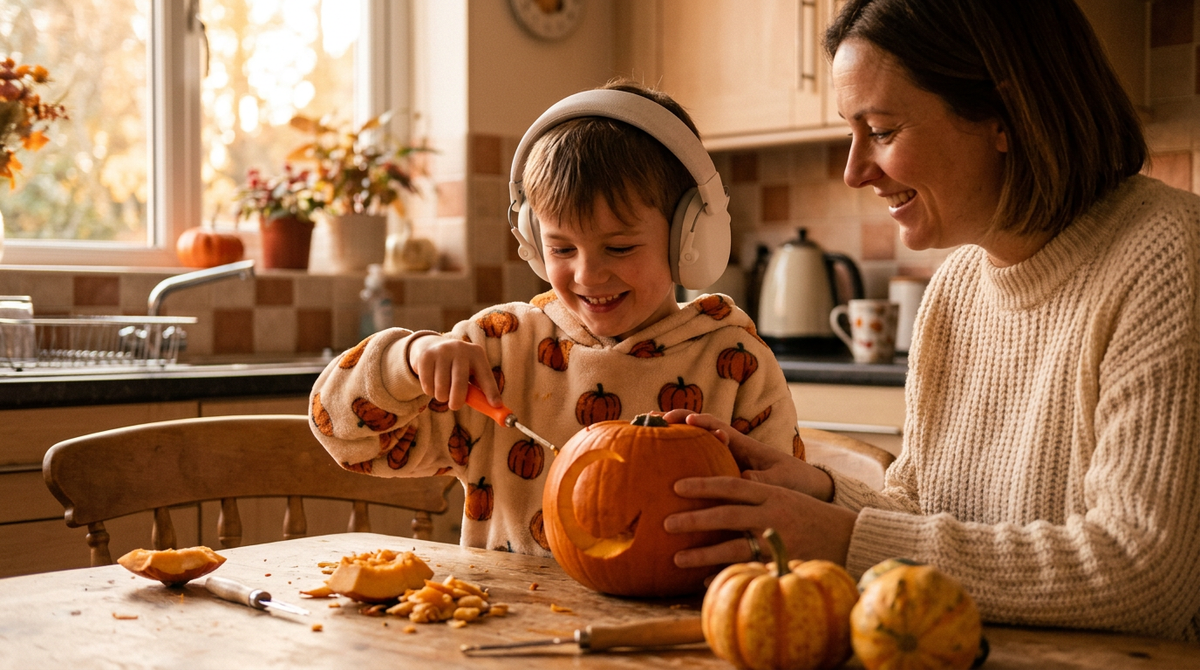
Some children simply do not enjoy Halloween, and that is fine. A film night with the lights low, baking pumpkin shaped biscuits or carving a pumpkin at the kitchen table can feel just as festive without the sensory load. Letting your child decide how much, or how little, they want to take part gives them a sense of control, and that matters as much as anything else on the night.
School Halloween Events
If your child’s school has a Halloween day or party, have a quick word with their teacher beforehand. Ask about costumes, noise levels and whether there is a quiet space available. Most schools are happy to make adjustments when they know what your child needs.
Final Thoughts
There is no right way to do Halloween. The aim is to find the version that works for your child, with enough preparation to make it predictable and enough flexibility to change plans if you need to. A comfortable costume, a quieter route, a way to manage noise and an easy exit can turn a stressful night into a good one.
Share:
The Best Sensory Headphones For Children With Autism In 2026