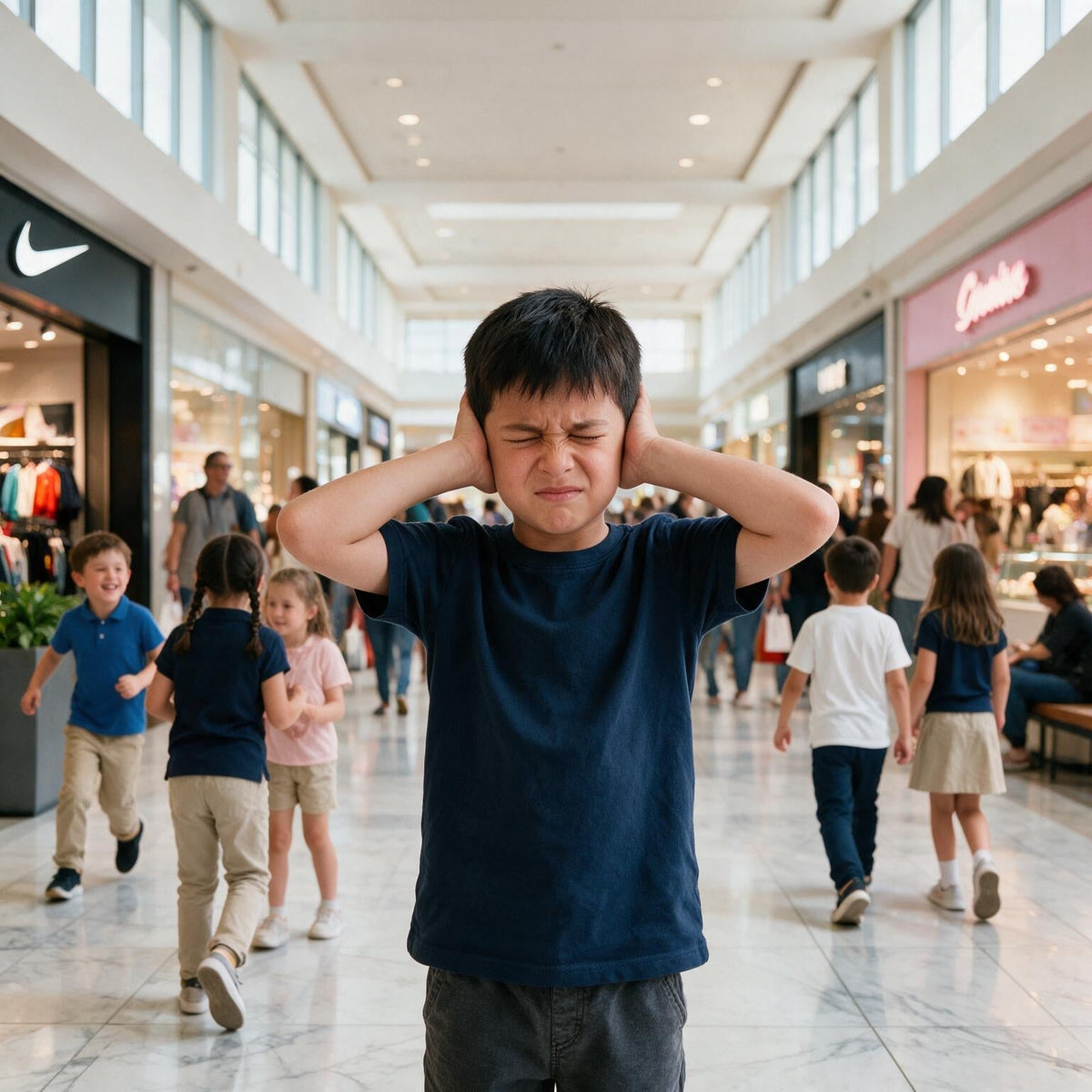
Does your child cover their ears at loud noises? Do they struggle in busy environments that other children seem to handle easily? You might be wondering, is my child noise sensitive?
You're not alone. Thousands of UK parents are asking the same question. Here are 10 signs to look out for.
What Is Noise Sensitivity In Children?
Noise sensitivity is sometimes called hyperacusis or auditory sensory sensitivity and is when everyday sounds feel louder, more intense or more distressing than they do for most people.
It's particularly common in children with autism, ADHD, sensory processing disorder (SPD) and other neurodiverse conditions, but it can also occur in children with no formal diagnosis at all.
The good news is that once you recognise the signs, there are simple and effective ways to help your child feel calmer and more comfortable in their everyday environment.
10 Signs Your Child May Be Noise Sensitive
1. They cover their ears frequently
One of the most common and visible signs is if your child regularly covers their ears or presses their hands against the sides of their head in response to everyday sounds like hand dryers, hoovers, music or crowd noise.
2. They become distressed in loud environments
Busy supermarkets, shopping centres, school corridors, birthday parties or crowded places cause your child visible distress including crying, tantrums, meltdowns or a strong desire to leave immediately.
3. They are startled by sudden sounds
Your child reacts strongly to unexpected noises like a door slamming, a dog barking, a fire alarm or even someone dropping something. The startle response is much stronger than you'd expect.
4. They complain that sounds are too loud
Your child regularly tells you that things are "too loud" even when the volume seems normal or quiet to everyone else. They may ask you to turn down the TV, radio or music frequently.
5. They struggle in the school environment
Noisy classrooms, busy lunch halls, loud playgrounds and echoing corridors are particularly challenging. Your child may come home exhausted, overwhelmed or emotionally drained after a school day.
6. They refuse to go to certain places
Your child consistently avoids or refuses to visit places associated with loud noise such as soft play centres, sports events, firework displays, theme parks or even certain shops or restaurants.
7. They are sensitive to specific sounds
Rather than all sounds, your child may have particular triggers like hand dryers, balloons popping, sirens, dogs barking or certain high pitched sounds that cause a disproportionate reaction.
8. They struggle to concentrate when it's noisy
Background noise that others can easily ignore , a TV in another room, traffic outside, other children talking, this makes it very difficult for your child to focus or complete tasks.
9. They have meltdowns after busy or noisy days
Even if your child manages to hold it together during a noisy event or busy day, they frequently have meltdowns or emotional crashes afterwards as their nervous system tries to recover from the sensory overload.
10. They are much calmer in quiet environments
You notice a significant difference in your child's mood, behaviour and ability to engage when they are in a calm, quiet environment compared to a busy or noisy one.
What Can You Do To Help?
If several of these signs sound familiar, the first step is to speak to your child's GP or school SENCO who can refer you for a formal assessment if needed.
In the meantime there are practical things you can do right now to help your child feel safer and more comfortable in everyday situations:
✅ Reduce noise exposure gradually
Don't avoid noisy environments completely, instead build up exposure gradually and always give your child a way to signal when they've had enough.
✅ Give them a warning before loud sounds
Prepare your child before entering noisy environments. Knowing what to expect can significantly reduce anxiety.
✅ Create a calm space at home
Give your child a quiet, low-stimulation space they can retreat to when they feel overwhelmed.
✅ Consider noise reducing headphones
Noise reducing headphones are one of the most effective and immediate tools for helping noise sensitive children. They reduce ambient noise without completely blocking sound, giving your child a quieter, safer experience of the world around them.
At LittleOllyBobs our Noise Ninjas are specifically designed for children with sensory sensitivities. They are comfortable, adjustable and available in fun colours that children actually want to wear.
When To Seek Further Help
If your child's noise sensitivity is significantly impacting their daily life, their ability to attend school, socialise or take part in everyday activities it's worth seeking professional support. Speak to your GP, health visitor or school SENCO for guidance on next steps.
You can also find practical advice and support in our range of Parent Guides — written by parents of neurodiverse children, for parents of neurodiverse children 💛
You're Not Alone
Parenting a noise sensitive child can feel isolating and overwhelming at times. But there is a growing community of parents across the UK who understand exactly what you're going through.
At LittleOllyBobs we were created by parents, for parents because we've been exactly where you are. Our son Oliver's noise sensitivity is what inspired everything we do, and helping families like yours is why we get up every morning 💛
Did this article help you? Share it with another parent who might need it.
Browse our full range of noise reducing headphones and parent guides at littleollybobs.com
Share:
Back to School 2026: Setting Your Sensory-Sensitive Child Up for a Calmer Term