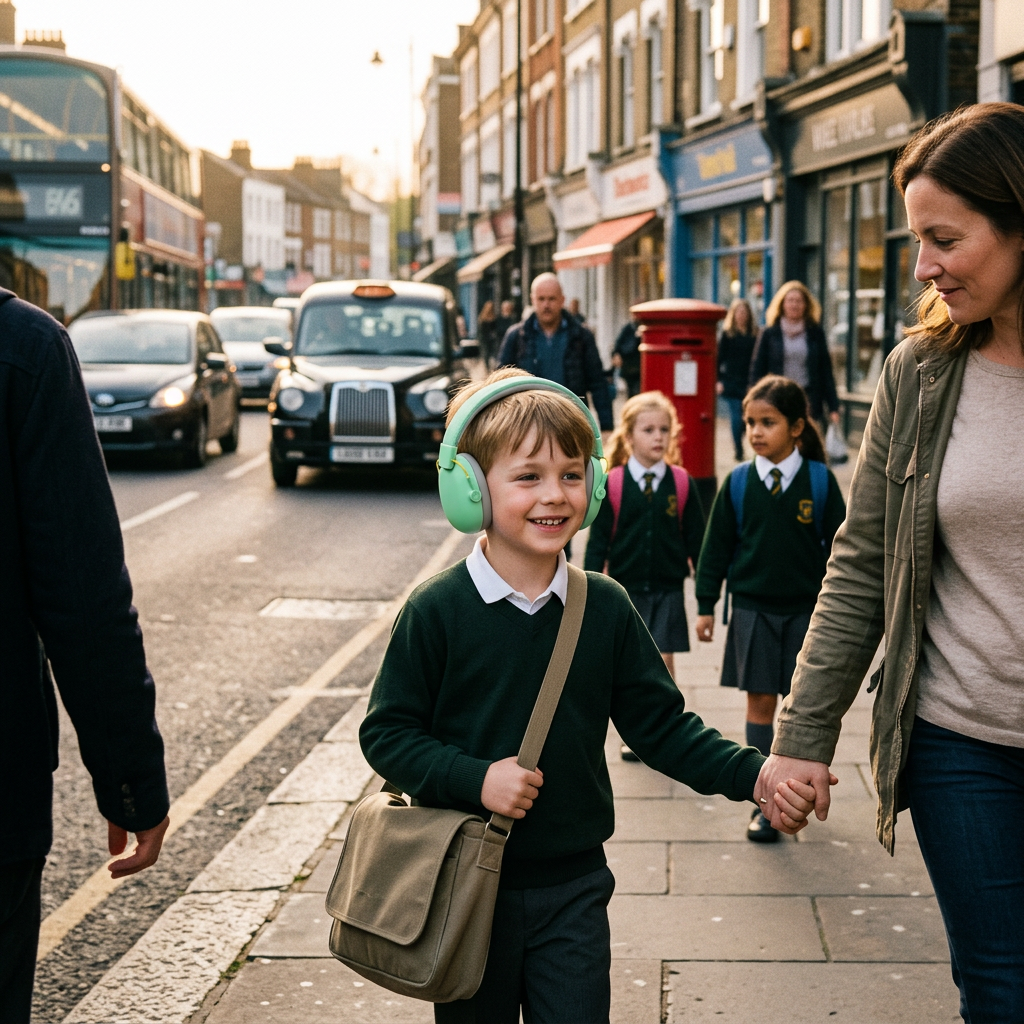
The summer holidays have a rhythm all their own, no bells, no crowded corridors, no unpredictable fire drills. For a lot of children, that quieter pace is a relief. So when September rolls back around, the return to school can feel less like excitement and more like bracing for impact.
If your child finds noise overwhelming , the scrape of chairs, the echo of a busy hall, thirty other voices all talking at once. The start of term brings a specific kind of dread. Not about the maths or the new teacher, but about simply getting through the day with their nervous system intact.
We wrote about this last year, and a lot has changed since. Over the past few months we've gone deeper into the science of sensory processing, talked to more parents about what actually helps day to day, and expanded the Noise Ninjas range with a new white colourway alongside Green, Pink and Blue. So this year's back-to-school post is less "here's an idea" and more "here's what we've learned works."
Why the first few weeks matter most
Children adjust to new routines gradually, but sensory systems don't get a grace period. A child who's spent six weeks in a quiet house is suddenly back in a room with thirty classmates, echoing acoustics, and no way to predict when the next loud noise is coming. That mismatch is often where the wobbles happen, not because anything is "wrong," but because the environment hasn't caught up with what their body can comfortably process yet.
Small, consistent supports in these early weeks tend to make a bigger difference than waiting to see how things settle on their own.
Practical ways to ease the transition
Talk about noise, not just nerves. Most back-to-school conversations focus on friends, timetables, and what to expect from lessons. It's worth adding one more question: "What sounds do you think might feel too loud?" Naming it in advance gives your child language for something they might otherwise only be able to show you through meltdowns or shutdown.
Do a dry run of the noisiest parts of the day. Assembly, the dinner hall, PE changing rooms, these are usually the pinch points, not the classroom itself. If you can, walk your child through what these spaces sound and feel like before day one, so nothing is a total surprise.
Build in a reliable way to turn the volume down. This is where a consistent pair of noise-reducing headphones earns its place in the school bag. Not as something to reach for in a crisis, but as a familiar tool your child already trusts, the same way some children carry a fidget toy or a favourite jumper. Predictability is often more calming than the noise reduction itself.
Loop in the school early. A quick note to the teacher or SENCO about your child's sensory needs, including that they may use headphones during certain parts of the day this tends to prevent misunderstandings later. Most schools are receptive when it's framed clearly and early, rather than explained after a difficult afternoon.
What we've heard from other parents this year
Since our last back-to-school post, several of you have told us that the biggest shift wasn't the headphones themselves, but when they were introduced. Children who wore them a little at home over the summer, during hoovering, at a football match, in the car, adjusted far more easily than those trying them for the first time on day one of term. If that's something you can fit in over the next few weeks, it's worth doing.
A quieter start to the year
We know September isn't just one big change, it's dozens of small ones, stacked on top of each other. You can't remove every unpredictable sound from a school day. But giving your child a consistent, trusted way to manage the ones that matter most can take a lot of the edge off, for both of you.
Share:
From Chaos to Calm: How Headphones Can Bring Peace to Family Life