

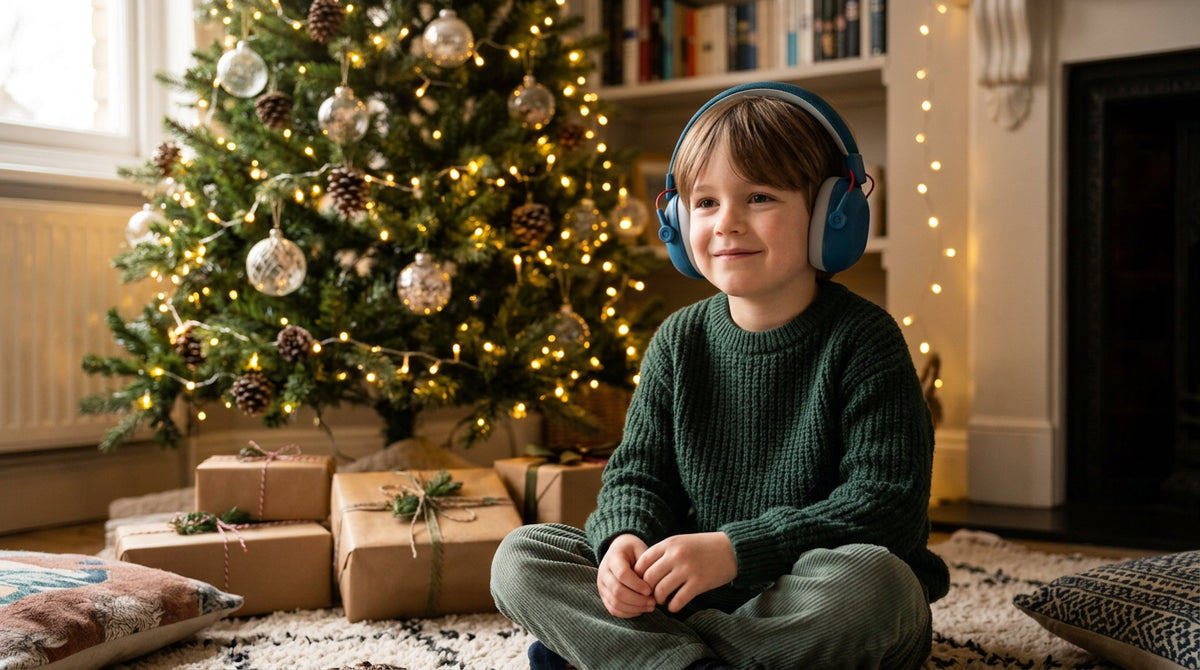
For lots of children, Christmas is the best time of the year. For a sensory sensitive child, it can also be the loudest, brightest and most unpredictable.
There are flashing lights, singing toys, crowded shops and relatives arriving in waves. Routines change, food changes and the house smells different. Add the noise of wrapping paper, crackers and a very excited sibling, and it is no surprise that some children find it hard to cope.
If that sounds like your house, you are not doing anything wrong. A few small changes can make the season feel calmer for everyone.
Why Christmas can feel so overwhelming
Sensory sensitive children often notice sights, sounds and textures more strongly than others. At Christmas, many of those things arrive at once.
- Sudden noises like crackers, party poppers and loud music
- Flashing or twinkling lights
- Crowds in shops, grottos and family gatherings
- A break from the normal daily routine
- Unfamiliar foods, smells and scratchy party clothes
When a child's senses are overloaded, they may become anxious, tearful, angry or withdrawn. It is not bad behaviour. It is their way of telling you they have had too much.
Ten ways to make Christmas calmer
1. Keep a few routines the same. You cannot protect every routine in December, but holding on to two or three, such as bedtime or breakfast, gives your child something steady.
2. Talk through the plan. Tell your child what is happening each day and who is coming. A simple picture calendar can help, and so can looking at photos of relatives beforehand.
3. Decorate slowly. Putting everything up in one afternoon can feel like a lot. Try adding a little each day, and let your child choose where things go. If flashing lights are a problem, steady lights are often easier to cope with.
4. Create a quiet retreat. Pick a room or corner where your child can go at any time, with soft lighting, favourite toys and their headphones within reach. Make it clear that using it is always allowed.
5. Spread out the presents. Opening a pile of gifts at once can be intense. Opening a few at a time, with breaks in between, can be much easier. Scrunched wrapping paper can be surprisingly loud too, so a quiet space for unwrapping can help.
6. Think about crackers. The bang can be very hard for some children. You could skip them, pull them away from the table, or let your child watch from another room.
7. Plan visits with an exit. Agree a signal with your child that means "I need a break" and tell relatives in advance that you may step outside for a few minutes. Leaving early is not failing.
8. Choose your outings carefully. Christmas markets, light switch ons and shows can be loud and crowded. Some venues offer quieter or relaxed sessions, so it is worth asking before you book.
9. Protect their ears. Noise reducing headphones can take the edge off sudden sounds without cutting your child off from you. Let them practise wearing them at home first, so they feel familiar rather than something that appears on the day. Our Noise Ninjas are designed for exactly this, and OllyBuds earplugs are a smaller option for older children who prefer something discreet.
10. Lower the bar. A good enough Christmas is a good Christmas. If the dinner is late, the tree is wonky and you spend an hour in the quiet room, you have still done it well.
Looking after yourself too
When you are managing your child's needs, your own can slide. Try to build in a break for yourself, even a short one, and ask a partner or relative to cover for a while. A calmer parent makes a calmer day.
If you would like more ideas for noisy days out, our parent guide Surviving Loud Days Out covers events, travel and busy places in more detail.
Whatever Christmas looks like for your family this year, we hope it is a gentle one.
Share:
How To Survive Halloween With A Sensory Sensitive Child